
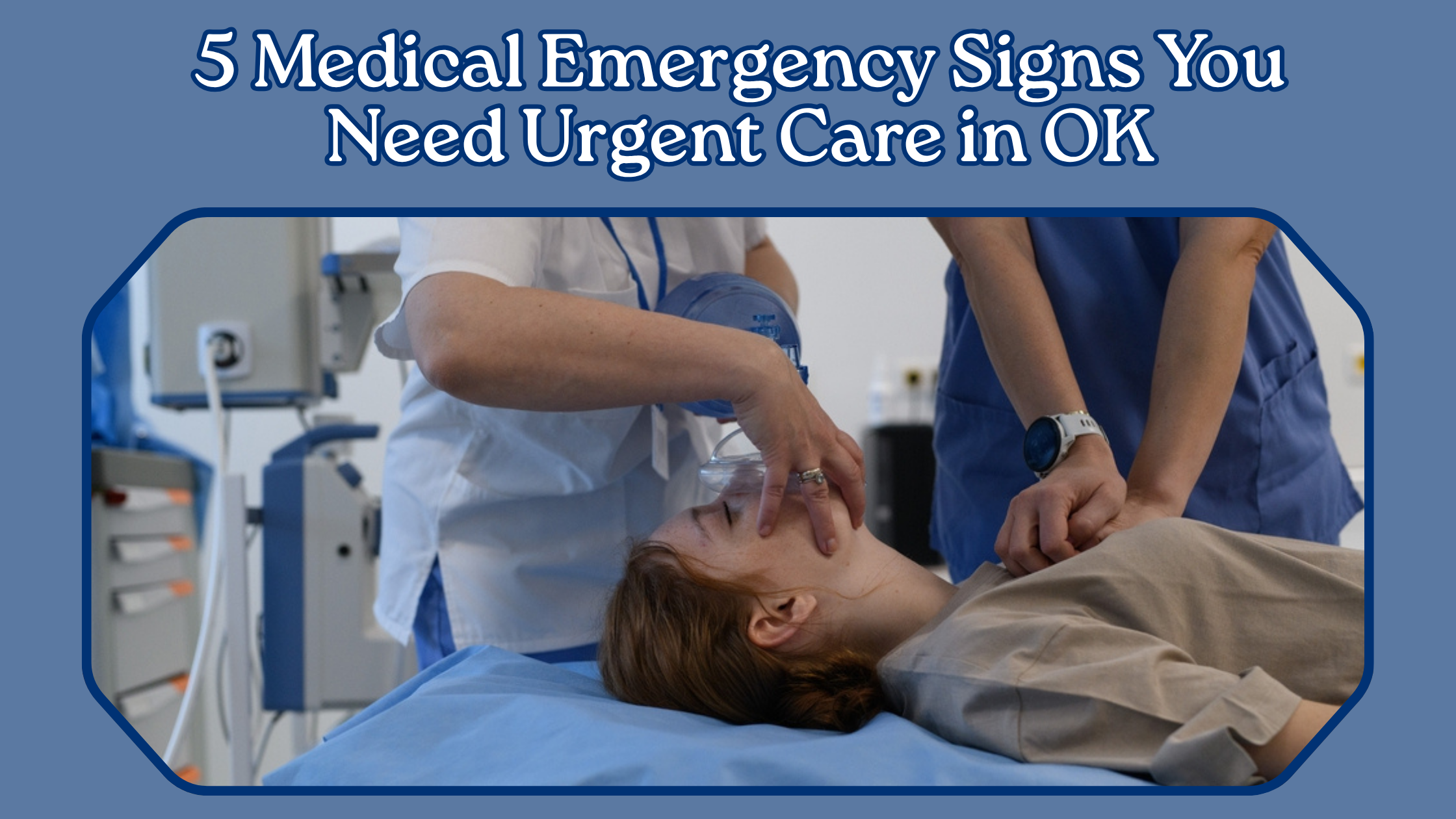
Medical problems could happen anytime. Some symptoms could be treated safely with same-day medical care, while others need emergency treatment right away. Knowing the difference could help you make a safer decision and avoid delays in treatment.
If you are looking for urgent care Oklahoma residents could use for sudden, non-life-threatening problems, Wellspring Family Clinic could help. However, serious symptoms should not be treated at an urgent care clinic. This guide explains five important signs of a medical emergency, what to do, and when urgent care would be right.
What Is a Medical Emergency?
A medical emergency is a sudden health situation that could cause serious harm if treatment is late. Examples include a possible heart attack, stroke symptoms, serious breathing problems, uncontrolled bleeding, and loss of consciousness.
If someone has a life-threatening condition, call 911 immediately. Do not drive yourself or another person who is unconscious, short of breath, confused, or experiencing serious stroke symptoms. Emergency medical teams could begin care during transportation and take the patient to the right emergency department.
Understanding urgent care vs Primary Care symptoms could also be helpful. Primary care is generally used for routine care, ongoing conditions, checkups, and problems that do not need immediate attention. Urgent care could be useful for sudden but stable problems such as minor injuries, infections, mild burns, or illnesses that need immediate treatment.
Recognizing the Most Common Medical Emergency Signs
1. Chest Pain, Pressure, or Tightness
Chest pain or pressure could be a warning sign of a heart attack. It may feel like squeezing, heaviness, fullness, or uncomfortable pressure. The discomfort would spread to the arm, shoulder, back, neck, jaw, or upper stomach.
Other warning signs are
- Shortness of breath
- When you feel cold sweats
- Nausea or vomiting
- Dizziness or fainting
- Suddenly weakness
- A feeling that something is seriously wrong
Heart attack symptoms could be different from person to person. Women, older adults, and people with diabetes may have symptoms such as unusual tiredness, nausea, or shortness of breath without strong chest pain.
Do not wait for symptoms to disappear. Call 911 if you think a heart attack may be happening.
2. Sudden Trouble Breathing
Sudden or serious breathing difficulty could be an emergency. Get immediate help if a person cannot speak normally because of shortness of breath, has blue or gray lips or skin, or feels unable to get enough air.
Serious asthma, serious allergic reactions, pneumonia, blood clots, and heart problems could cause breathing difficulties. Breathing problems that begin after eating, taking medicine, or exposure to an allergen may be a sign of anaphylaxis.
If a prescribed epinephrine auto-injector is available for a suspected allergic reaction, use it as directed and call 911.
Sit upright if that makes breathing easier. Stop driving yourself when breathing problems are consistent.
3. Possible Stroke Symptoms
A stroke needs emergency treatment because every minute could matter. One easy way to remember the main warning signs is BE-FAST:
- B — Balance: Sudden loss of balance or coordination
- E—Eyes: Sudden vision changes
- F—Face: One side of the face droops
- A—Arms: One arm becomes weak or numb
- S—Speech: Speech becomes slurred, confused, or difficult to understand
- T—Time: Call 911 immediately
Other possible symptoms include sudden severe headache, confusion, numbness, dizziness, or difficulty walking.
Note the time the symptoms started or the last time the person was known to be well. Even if the symptoms improve, an emergency checkup is still important because the episode could be a transient ischemic attack (TIA), which could warn of a future stroke.
4. Uncontrolled Bleeding or a Serious Injury
Heavy bleeding, deep wounds, crushing injuries, or serious injuries to the head, neck, spine, or chest may need emergency care. If bleeding is serious, continues despite firm direct pressure, or is accompanied by weakness, confusion, pale or clammy skin, or fainting.
Apply firm, continuous pressure with clean gauze or cloth. If blood soaks through, continue applying pressure and follow emergency dispatcher instructions. Do not remove an object that is embedded in a wound.
For smaller cuts, minor burns, sprains, and other stable injuries, same-day medical care may be right. Wellspring Family Clinic could check many non-life-threatening injuries and help to understand whether additional treatment is needed.
5. Sudden Loss of Consciousness, Seizures, or Severe Confusion
Sudden fainting, a seizure, severe confusion, or a person who cannot be awakened could have many possible causes, like stroke, low blood sugar, infection, poisoning, head injury, or another serious medical problem.
During a seizure, move nearby dangerous objects away and protect the person’s head. Do not restrain the person or put food, water, or anything else in their mouth. When possible, place the person on their side after the seizure and monitor their breathing.
If the seizure lasts longer than five minutes, happens repeatedly, causes serious injury, occurs in water, or involves someone who is pregnant or has diabetes.
Which Symptoms Need Immediate Medical Attention?
For potentially life-threatening symptoms such as serious chest pain, major breathing difficulty, stroke warning signs, uncontrolled bleeding, or unresponsiveness.
Emergency departments could provide advanced testing, emergency medications, surgery, and intensive monitoring when needed.
For urgent but stable concerns, an urgent care clinic may be appropriate. Examples include minor injuries, painful ear infections, urinary symptoms, mild burns, certain infections, and allergic rashes without breathing problems.
If you are not sure whether a symptom is an emergency, seek professional medical guidance rather than delaying care.
How to Prepare for a Medical Emergency
Preparation could save valuable time. Keep an updated list of:
- Current medications
- Allergies
- Medical conditions
- Emergency contacts
- Primary care provider information
Keep the information on your phone and a printed copy in an easy-to-find location.
Know where your nearest emergency department and urgent care clinic are located. Keep basic first aid supplies and any prescribed emergency medicines available at home.
Families should also discuss who would call the emergency number, who would meet emergency responders, and where important medical information is stored.
Common Mistakes to Avoid During Emergencies
Do not wait to see whether serious symptoms go away. Do not drive someone who is unconscious, short of breath, or showing signs of a stroke. Never give food, drinks, or oral medicine to someone who is unconscious. Also, do not assume symptoms are harmless because they improve. Some serious conditions could cause symptoms that come and go. Online information could help you understand symptoms, but it cannot replace an examination by a healthcare professional.
Final Thoughts
Knowing the signs of a medical emergency could help you respond quickly when serious symptoms happen. Chest pressure, serious breathing problems, stroke symptoms, uncontrolled bleeding, and sudden loss of consciousness should never be ignored.
When symptoms may be life-threatening. For stable problems that need immediate attention, urgent care Oklahoma patients could understand the suitable option.
If you need urgent care near me, same-day medical care, or help deciding where to seek treatment, Wellspring Family Clinic could help you understand your care options.
Need care today? Contact us at Wellspring Family Clinic to discuss your symptoms, available services, and next steps. If you believe you are experiencing a medical emergency.
Frequently Asked Questions
1. Can children show different emergency symptoms than adults?
Yes. Children may show unusual sleepiness, poor responsiveness, blue or gray skin, rapid breathing, persistent vomiting, dehydration, or sudden changes in behavior. If a child seems seriously ill or is difficult to wake, seek emergency medical help.
2. Should I call 911 for sudden severe abdominal pain?
Sudden or severe abdominal pain needs an emergency check, especially when it happens with fainting, vomiting blood, a rigid abdomen, pregnancy, severe weakness, or other serious symptoms. When in doubt, seek professional medical advice immediately.
3. What information should I tell emergency responders?
Tell responders what symptoms are happening, when they began, current medications, allergies, medical conditions, recent injuries, and possible exposure to medicines, chemicals, or other substances. Also explain if symptoms improved or became worse.
4. Can anxiety cause symptoms similar to medical emergencies?
Anxiety could cause chest tightness, a fast heartbeat, dizziness, and shortness of breath. However, new, severe, or unusual symptoms should not automatically be blamed on anxiety. A medical checkup could help rule out dangerous causes.
5. What should I do if emergency symptoms happen while traveling?
Call the local emergency number and give your exact location. Follow the emergency dispatcher’s instructions, do not delay treatment, and try to find a familiar healthcare provider.