
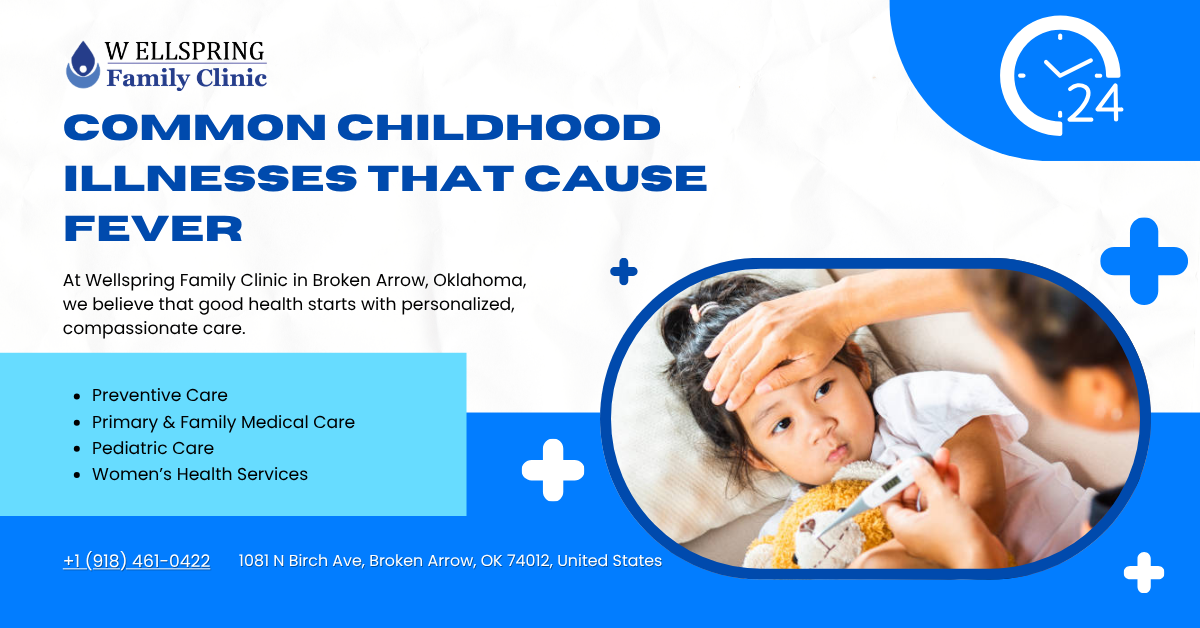
As a parent, few things could be as concerning as your child running a high fever. While fever is often a natural response to infection, understanding the common childhood illnesses that cause fever is very important for effective management. At Wellspring Family Clinic, we prioritize your child’s health with our multi-step primary care services. In this guide, we will explore the most prevalent childhood viral illnesses that lead to fever, helping you identify when it’s time to consult a doctor.
What is a fever?
A fever is defined as a temporary increase in body temperature, usually in response to an illness. For children, a fever is defined as any body temperature that exceeds 100.4°F (38°C). The body uses fever as a defense mechanism to fight infections, yet it creates distressing symptoms. However, not all fevers share the same characteristics. Medical professionals require context assessment to evaluate high-fever situations because children with high fevers who do not exhibit any other symptoms need special case evaluation.
Common Childhood Illnesses That Cause Fever
1. Viral Infections
Many of the time, doctors prescribe antibiotics for high fever, but people are now more aware and become more alert. Some common fevers are viral infections that might cause fever in children.
- Common Cold: It is caused by various viruses; the common cold often presents with mild fever, runny nose, and cough.
- Influenza (Flu): The viral infection would cause the patient to experience high fever, chills, body pain, and extreme exhaustion. The flu season reaches its highest point during the winter months, although it may start at different times throughout the year.
- Hand, Foot, and Mouth Disease: It is characterized by sores in the mouth and rash on the hands and feet, this ailment is known to cause mild to moderate fever.
2. Bacterial Infections
These infections are more common, and bacterial infections could also lead to fevers.
- Strep Throat: Streptococcus bacteria cause strep throat, which results in high fever and sore throat and swollen lymph nodes. Medical treatment is essential because untreated cases would develop into serious health problems.
- Urinary Tract Infections (UTIs): Children who are younger than five years old will develop a fever when they have urinary tract infections. The condition produces symptoms, which include painful urination along with abdominal discomfort.
3. Roseola
Roseola is a viral illness that typically affects infants and toddlers. The disease starts with a high fever that lasts three to five days before the appearance of a specific rash during the fever’s decline. Parents who understand this condition will learn to recognize how young children develop their fever patterns.
4. Ear Infections
Ear infections are a common condition in children. The illness results in fever and irritability and ear pain. Parents should take their child to a doctor for assessment and treatment options when they think their child has an ear infection.
5. Gastroenteritis
Gastroenteritis is commonly known as the “stomach flu” because it produces symptoms including fever, vomiting, and diarrhea. The illness causes a severe dehydration risk, which requires parents to track their child’s fluid consumption and contact a doctor for ongoing symptoms.
When to Seek Medical Attention
Knowing when it is the right time to consult a medical provider could be difficult, especially when it comes to first-time parents. Here are some suggestions regarding how to proceed:
- High Fever in Kids with No Other Symptoms: Any child who has a high fever and no other associated complaint for more than 3 days is advised to be seen by the doctor.
- Persistent Symptoms: If your child has a persistent fever alongside throwing up or diarrhea and signs of dehydration, this is a clear indication that medical attention must be taken without any delay.
- Signs of Severe Illness: If your child feels lethargic, is irritable, or has difficulty breathing, then don’t delay seeking a doctor’s consultation.
Home Care Tips for Managing Fever
While waiting for a medical appointment or during mild illnesses, there are several home care strategies you could implement.
- Stay Hydrated: Your child must drink plenty of fluids like water, clear broths, or electrolyte solutions.
- Comfortable Environment: Keep your child comfortable by dressing them in lightweight clothing and maintaining a moderate room temperature.
- Medication: Acetaminophen and ibuprofen. Don’t overdose of medicines. For effective treatments for both fever reduction and pain relief. You must seek medical advice before you give any medication to patients.
Conclusion
The understanding of common childhood diseases that result in fever needs to be mastered by all parents. The knowledge you acquire helps lead to immediate action, which leads to proper medical treatment for your child. The Wellspring Family Clinic gives you perfect treatment for pediatric fever, which helps parents to face these medical situations with self-assurance.
Parents should contact a medical clinic for expert help when their child has a high fever or other serious medical symptoms. Don’t ignore it and take immediate action regarding your child’s health.